

.png)
BOOK REVIEW: Greta Garbo and the Rise of the Modern Woman

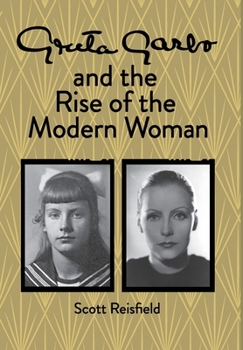
Some stars belong so completely to their own era that time turns them into museum pieces. And sometimes, not for the better, just sayin. Greta Garbo, however, does the opposite. The more distance we get from the silent screen, the studio system, and the glamour machinery of old Hollywood, the more modern she seems.
Scott Reisfield’s Greta Garbo and the Rise of the Modern Woman understands that strange lasting power. This is not just a book about a movie star. It is a book about image, independence, privacy, and the quiet force of a woman who refused to explain herself for public comfort. And yes, we will be diving into Miss Greta's story in more detail, eventually!
Greta is often reduced to a few familiar ideas. The face. The voice. The famous desire to be left alone. You and me both, Greta. What Mr. Reisfield does well is push past the shorthand without trying to destroy the mystery. That matters. Greta’s mystery is part of the point, but even mystery can become boring when every retelling leans on it too hard. This book, thankfully, avoids that trope.
A great thing, in my opinion, is that the book doesn't treat Greta’s independence as a side note. It sits at the center of the story. And why shouldn't it?? Her career was built inside a powerful studio system, yet her persona always suggested escape from control. That withheld quality became her signature.
Mr. Reisfield is especially good at showing how Greta’s appeal was not simply beauty. We hear plenty of talk about how beautiful she was (AND SHE WAS), but the true essence of who she was is often lacking from many other commentators. That difference gives the book its energy. It helps explain why Greta still attracts new fans who may not know every film in her career. She represents a kind of autonomy that feels contemporary. She did not perform availability. She did not turn celebrity into constant confession (something that many people today should try, I'M JUST SAYING). She let absence speak.
A Greta Garbo book needs glamour, but it also needs tension. Mr. Reisfield gives us both. The glamour comes naturally: the studios, the portraits, the costumes, the carefully shaped public image. Yet the book does not feel satisfied with surfaces. It keeps returning to the cost of being turned into an icon while still being a private person.
That, my friends, is where Greta becomes most interesting. Her withdrawal from fame was not a gimmick. It still reads as one of the clearest refusals in celebrity history. Seen from today, that choice resonates LOUDLY. Modern celebrity, as we know, often runs on access. Fans expect interviews, behind-the-scenes details, personal revelations, and constant visibility. Greta built a legacy from selectiveness. And there is nothin' wrong with that, folks....
The book also benefits from treating Greta as part of a larger cultural shift. She was not alone in changing screen femininity (hello, Clara Bow!), but she had a rare impact all her own. Her image could suggest desire, sadness, intelligence, and refusal without needing to explain any of it. Which was quite a departure from the "traditional woman" of yesteryear.
The book’s frame is compelling, and some sections invite a deeper look at specific performances, especially for those who know her films well (raises hand) and want closer readings of her acting choices. The book is more rewarding as a cultural portrait overall, than as a scene-by-scene study. It is interested in what Greta meant, not only in what she did.
For me, that approach works very well. In all honesty, Greta’s influence can't be measured just by film credits... It lives in the way she changed the definition of stardom. She made inwardness visible. She made privacy glamorous. And it certainly is. Again, we need more of this in our modern, digital, broadcast-a-broken-nail society!
As we've shown on this blog a number of times, many stars survive through nostalgia. Greta survives because her image still asks fresh questions: How much of ourselves do we owe the public? Can a woman be admired without being fully consumed? What does power look like when it does not announce itself?
Mr. Reisfield’s book is at its best when it lets those questions sit with the reader. Greta’s life does not become a neat and tidy story, and it shouldn't. That resistance gives the book its lasting emotional pull. It requires the reader to reflect on those questions in general. Maybe even rethink one's views a bit. Which, in my humble opinion, is an excellent way to write a book.
Greta Garbo and the Rise of the Modern Woman is a thoughtful, elegant read for anyone interested in old Hollywood, film history, or the changing image of women in the 20th century. It respects Greta’s legend, without becoming trapped by it. The book does not strip away the mystery. It gives the mystery context.
That is the right choice. Greta Garbo remains fascinating because she never fully gave herself over to fame. She left some things unseen. And Mr. Reisfield’s book reminds us that her distance was not emptiness. It was part of her power....as it is for us all. Pick up a copy pretty much anywhere books are sold (link to my favorite bookseller below)!


Comments